About Me

My photo
EDUCATION: Holt High School, Holt Mich., Lansing Community College, Southwestern Theological Seminary, National Apostolic Bible College. MINISTERIAL EXPERIENCE:61 years of pastoral experience, 11 churches in Arizona, New Mexico and Florida. Missionary work in Costa Rica. Bishop of the Districts of New Mexico and Florida for the Apostolic Assembly. Taught at the Apostolic Bible College of Florida and the Apostolic Bible College of Arizona. Served as President of the Florida Apostolic Bible College. Served as Secretary of Education in Arizona and New Mexico.EDUCACIÓN:Holt High School, Holt Michigan, Lansing Community College, Seminario Teológico Southwestern, Colegio Bíblico Nacional. EXPERIENCIA MINISTERIAL:51 años de experiencia pastoral, 11 iglesias en los estados de Arizona, Nuevo México y la Florida. Trabajo misionera en Costa Rica. Obispo de la Asamblea Apostólica en los distritos de Nuevo México y La Florida. He enseñado en el Colegio Bíblico Apostólico de la Florida y el Colegio Bíblico Apostólico de Arizona. Presidente del Colegio Bíblico de la Florida. Secretario de Educación en los distritos de Nuevo México y Arizona.

Thursday, March 17, 2022

LA IMPOSICIÓN DE MANOS

"Por tanto, dejando ya los rudimentos de la doctrina de Cristo, vamos adelante a la perfección; no echando otra vez el fundamento del arrepentimiento de obras muertas, de la fe en Dios, de la doctrina de bautismos, de la imposición de manos, de la resurrección de los muertos y del juicio eterno." Hebreos 6:1-2

Las Sagradas Escrituras nos enseñan que la doctrina de la imposición de manos, corresponde a los rudimentos de la fe cristiana, es decir a las doctrinas que todo verdadero cristiano debe conocer y que son la base de nuestra fe. Es tan importante, que aparece dentro de la misma lista de los rudimentos o fundamentos, tales como la doctrina del arrepentimiento, la doctrina de la fe en Dios, la doctrina de bautismos, la doctrina de la resurrección, y la doctrina del juicio eterno. La Escritura nos enseña que la imposición de manos es algo que le pertenece a la Iglesia de hoy (Marcos 16: 17-18).

La imposición de manos es una forma de hacer contacto para poder bendecir a alguien. La palabra imposición en hebreo es camak que significa sostener, apuntalar, sustentar, apoyar, afianzar, báculo. En griego es epithesis que quiere decir poner sobre y se deriva de la raíz Epi que significa sobre y Tithemi que significa poner, colocar. En resumen la imposición de manos sobre algo o alguien en forma pasiva.

Siendo que estamos hablando de imposición de manos debemos entender por esa definición que cuando las manos son impuestas en la forma correcta y con el propósito correcto algo debe ocurrir. La imposición de manos es un acto sagrado con un valor importante para Dios y así de importante debe ser para nosotros. No es meramente el acto de imponer manos, sino el propósito por el cual se está haciendo.

¿PARA QUE Y A QUIENES SE IMPONE LAS MANOS?

Se imponen manos porque es una de las formas de comunicación que nos permite extendernos hacia los demás para trasmitirles bendición o poder de parte de Dios. En el Antiguo Testamento la imposición de manos era básicamente una facultad de los patriarcas, profetas y sacerdotes, les imponían las manos para:

A. Reconocer sucesores: Números 27:18-23 

B. Consagrar la ofrenda a Dios: Éxodo 29:15 


C. Designer Reyes: I Samuel 10:1, 16:13 


D. Trasmitir bendición y herencia a los hijos: Génesis 48:14 


E. Descargar los pecados al pueblo: Levítico 16:21


F. Recibir sabiduría: Deuteronomio 34:9


G. Ungir sacerdotes: Números 8:10


H. Como castigo al blasfemo: Levítico 24:14 

Cada una de estas imposiciones de manos es figura para nosotros en este tiempo de gracia. Desde los tiempos de nuestro Señor Jesucristo hasta nuestros tiempos la imposición de manos continúa vigente en la iglesia y se utiliza para ministrar:

A. Salvación, santidad y liberación, Mar. 5:238:236:5; Lc. 13:11

B. El bautismo en el Espíritu Santo, Hch. 8:19; 19:6

C. Para enviar misioneros, Hchs. 13:3

La imposición de manos continúa vigente en la iglesia de hoy y con la ayuda y guianza del Espíritu Santo podemos llevar bendición a los demás.

ADVERTENCIA IMPORTANTE

"No impongas con ligereza las manos a ninguno, ni participes en pecados ajenos. Consérvate puro. "(1 Timoteo 5:22)

De veras cuando profundizamos al respecto nos asombramos de ver hoy la soltura con la que muchas veces los pastores o evangelistas o cualquier ministro, comienzan a poner sus manos sobre cualquier cabeza que se le cruce. Mientras que la Biblia nos exhorta a imponer las manos, nos previene también de hacerlo.

La exhortación a Timoteo y a todos nosotros es a no ser rápidos al imponer manos. Cuando le dice “a ninguno” está dejando ver que no podemos impresionarnos con títulos, posiciones o posesiones. No importa el título que obstante alguien, sin no somos dirigidos por el Señor a imponer manos, no lo hagamos. Cuando miramos a nuestro alrededor veremos que no se ha tomado tanto en serio, pues vemos a muchas personas ejerciendo ministerios que no deberían estar ahí. 

Note el consejo que el Apóstol Pablo le da a Timoteo del tremendo peligro que es imponer las manos con ligereza. El problema no está en imponer manos, sino en hacerlo con ligereza, esta voz griega 'tacis' significa hacer algo apresuradamente, con rapidez, hacer algo precipitadamente, muy pronto. Es decir que no se debería imponer manos apresuradamente, aquí no se está hablando de rapidez o lentitud en cuanto a tiempo, sino que no se debe imponer manos sin antes analizar por el Espíritu la condición en la que se encuentra cada persona a la que debemos ministrar. La doctrina de la imposición de manos debe ir acompañada con el discernimiento de espíritus (1 Corintios 12:10). De no ser así el ministro que este ministrando, es decir 'dando', puede terminar 'recibiendo' lo que no es bueno, es decir que 'comparte', 'forma parte de', 'participa' de los pecados de aquella persona que pueda tener contaminación en la carne y en el espíritu (II Corintios 7:1, Judas 22, 23).

Estos dos textos nos indican que existen contaminaciones de las cuales debemos cuidarnos. No podemos ignorar que por medio de imponer manos un hombre por más sincero y limpio que sea, puede participar de pecados ajenos.

¿Cómo puede ser esto? La respuesta es sencilla, así como se transmiten dones espirituales por medio de la imposición de manos, también cabe la posibilidad de conferir otras cosas (1 Timoteo 4:14).

En el pasaje que acabamos de leer, encontramos que la imposición de manos es acompañada con profecía, lo cual explica que no es simplemente un rito eclesiástico, sino que en ese instante está implícita o explícitamente desarrollándose una actividad profundamente espiritual. Es decir que la doctrina de la imposición de manos nos ensena que con esta actividad siempre se está confiriendo algún don espiritual con el fin de 'adornar' a la iglesia, y no para despeinar a nadie.

Quizás Ud. está pensando en las oportunidades en las cuales se le impusieron manos, y tal vez piense que en una oportunidad no sintió nada mientras que en otras sí; pero esto en ninguna manera representa que cuando sentimos algo recibimos de Dios y cuando no, no recibimos. Porque nuestra vida no se rige por lo que sentimos, sino por lo que creemos: No andamos por vista (por los cinco sentidos), sino por fe.

BENEFICIOS DE LA IMPOSICIÓN DE MANOS

A. Se recibe el Espíritu Santo (Hechos 8:17)

B. Se reciben dones espirituales (1 Timoteo 4:14)

C. Se recibe sanidad (Marcos 16:18)

D. Se recibe bendición (Génesis 48:14-22)

E. Se recibe autoridad delegada (Deuteronomio 34:9)

F. Se realizan milagros extraordinarios (Hechos 19:11)

G. Se recibe unción para el servicio (Hechos 6:1-6)

Es necesario entender que el poder no está en las manos de los ministros sino en Dios.

A. La imposición de manos tiene como propósito glorificar a Dios, y extender la cobertura de los cinco ministerios.

B. Es para todo aquel que crea y se deje guiar por el Espíritu Santo.

C. Imponer las manos es parte de la ministración al pueblo de Dios donde pueden suceder milagros, sanidades, liberaciones, etc.

D. Son las personas autorizadas por el Espíritu Santo y por nuestras autoridades para imponer las manos.

Todo esto nos demuestra que la imposición de manos es algo sumamente importante y de mucho cuidado. Para que un creyente tome la decisión de imponer las manos para realizar cualquiera de los usos que la Biblia nos enseña, debe estar muy seguro de que esa es la voluntad de Dios.

¿Qué tal que alguien impusiera las manos para atribuir poder o autoridad a alguien a quien Dios no ha llamado? ¿Qué tal que alguien impusiera las manos para bendecir a quien Dios no quiere bendecir? Por eso la Biblia dice: "No impongas con ligereza las manos a ninguno, ni participes en pecados ajenos. Consérvate puro" (1 Timoteo 5: 22).


THE LAYING ON OF HANDS

"Therefore leaving the principles of the doctrine of Christ, let us go on unto perfection; not laying again the foundation of repentance from dead works, and of faith toward God, of the doctrine of baptisms, and of laying on of hands, and of resurrection of the dead, and of eternal judgment." Hebrews 6:1-2

Scripture teaches us that the doctrine of the laying on of hands corresponds to the fundamentals of the Christian faith, which are the doctrines that every true Christian should know and which are the basis of our faith. It is so important that it appears in the same list of the principles or fundamentals, such as the doctrine of repentance, the doctrine of faith in God, the doctrine of baptisms, the doctrine of the resurrection, and the doctrine of eternal judgment. Scripture teaches us that the imposition of hands is something that belongs to the church of today (Mark 16: 17-18).

The laying on of hands is a way to make contact to bless someone. The word in Hebrew is camak which means sustain; shore up, support, supporting, strengthening, and staff. In Greek, it is epithesis that means putting on and is derived from the root meaning of Epi which means putting, and tithemi which means place. In summary, the laying on of hands on someone or something passively.

Since we are talking about laying on of hands we should understand by that definition that when the hands are placed in the right way and for the right purpose something should happen. The laying on of hands is a sacred act with a significant value to God and thus should be important to us. It is not merely the act of laying hands, but the purpose for which it is done.

WHY AND ON WHOM ARE THE HANDS LAID ON?

Hands are imposed because it is one of the forms of communication that allows us to extend ourselves to others to convey the blessing and power of God. In the Old Testament, the laying on of hands was basically a faculty of the patriarchs, prophets, and priests, hands were laid to:

A. Recognize successors: Numbers 27:18-23


B. Consecrate the offering to God: Exodus 29:15


C. Designate kings: I Samuel 10:1, 16:13


D. Transmit blessing and inheritance to sons: Genesis 48:14


E. Absolve the sins of the people: Leviticus 16:21


F. Receive wisdom: Deuteronomy 34:9


G. Anoint priests: Numbers 8:10


H. As punishment for the blasphemer: Leviticus 24:14

Each one of these impositions of hands is a figure for us in this time of grace. From the time of our Lord Jesus Christ to our time the laying on of hands continues in force in the church and used to minister:

A. Salvation, holiness, and deliverance: Mark 5:23, 8:23, 6:5; Luke 13:11


B. The baptism in the Holy Spirit:  Acts. 8:19; 19:6


C. To send missionaries: Acts 13:3

The imposition of hands is still valid in today's church and with the help and guidance of the Holy Spirit can bring blessing to others.

IMPORTANT WARNING

"Lay hands suddenly on no man, neither be partaker of other men’s sins: keep thyself pure." (1 Timothy 5:22)

Really when we go deeper in this regard we are astonished to see today the ease with which many pastors or evangelists or any minister, begin to lay their hands upon anyone that crosses their path. While the Bible exhorts us to lay hands, it also prevents us from doing so.

The exhortation to Timothy and to all of us is to not be quick to lay hands. When he says "no man" He is telling us that we should not be impressed with titles, positions, or possessions. It doesn't matter the title that someone might have, if we are not directed by the Lord to lay hands, we should not do it. When we look around we see that this has not been taken very seriously, as we see many people exercising ministries that should not be there.

Notice the advice the Apostle Paul gives Timothy about the tremendous danger of laying hands hastily. The problem is not in lay hands, but do it hastily, this Greek word 'tacis' means doing something hastily, quickly, abruptly, hurriedly. In other words, you should not lay hands hastily; here we are not talking about fast or slow in time, but that we should not lay hands without first analyzing by the Spirit the condition in which each person is that we are ministering to. The doctrine of the laying on of hands must be accompanied by the discernment of spirits (1 Corinthians 12:10). Otherwise, the minister that this ministering, that is 'given', may end up 'receiving' what is not good, that is, 'share', 'form part of', 'participate' of the sins of the person who may have contamination in the flesh and spirit (II Corinthians 7:1, Jude 22, 23).

These two texts indicate that there are contaminations of which we must be careful of. We cannot ignore that through laying on of hands a man regardless of how sincere and clean he may be, can participate in the sins of others.

How can this be? The answer is simple, the same way that spiritual gifts are transmitted through the laying on of hands, it is also possible to confer other things (1 Timothy 4:14).

In the passage we just read, we find that the laying on of hands is accompanied by prophecy, which explains that it is not merely an ecclesiastical rite, but at that moment he is implicitly or explicitly fulfilling a deeply spiritual activity. That is to say that the doctrine of the laying on of hands teaches us that through this activity some spiritual gift is always being conferred in order to 'decorate' the church, and not to upset anyone.

Perhaps you are thinking of the times that hands were laid on you, and may think that at one time you felt nothing while others times you did; but this in no way represents that when we feel something we receive from God and when we do not, we don't receive. Because our life is not governed by what we feel but by what we believe: We do not walk by sight (the five senses), but by faith.

BENEFITS OF LAYING ON OF HANDS

A. The Holy Spirit is received (Acts 8:17)


B. Spiritual gifts are received (1 Timothy 4:14) 


C. Healing is received (Mark 16:18)


D. Blessings are received (Genesis 48:14-22)


E. Delegated authority is received (Deuteronomy 34:9)


F. Extraordinary miracles are performed (Acts 19:11)


G. Anointing for service is received (Acts 6:1-6)

We need to understand that the power is not in the hands of the ministers but God.

A. The imposition of hands is meant to glorify God and to extend the coverage of the five ministries


B. It is for all who believe and are guided by the Holy Spirit.


C. The laying on of hands is part of the ministry to God's people by which miracles, healings, deliverances, etc can happen.


D. They are the persons authorized by the Holy Spirit and by our authorities to lay hands.

All this shows that the imposition of hands is something very important and should be done with great care. A believer who decides to lay hands for any of the uses that the Bible teaches us must be very sure that this is the will of God.

What if someone laid hands to confer power or authority to someone to whom God has not called? What if someone lays hands to bless someone who God did not want to bless? That is why the Bible says: "Do not be hasty in the laying on of hands, and do not share in the sins of others. Keep yourself pure." (I Timothy 5:22)


Thursday, March 10, 2022

EL MINISTERIO PROFÉTICO

Seguid el amor; y procurad los dones espirituales, pero sobre todo que profeticéis. Porque el que habla en lenguas no habla a los hombres, sino a Dios; pues nadie le entiende, aunque por el Espíritu habla misterios. Pero el que profetiza habla a los hombres para edificación, exhortación y consolación. El que habla en lengua extraña, a sí mismo se edifica; pero el que profetiza, edifica a la iglesia. Así que, quisiera que todos vosotros hablaseis en lenguas, pero más que profetizaseis; porque mayor es el que profetiza que el que habla en lenguas, a no ser que las interprete para que la iglesia reciba edificación. (I Corintios 14:1-5)

Dios es un Dios personal. Él Desea una relación íntima con los individuos más que una relación lejana con la humanidad como raza. Cuando Adán y Eva fueron toda la raza, Dios caminó y habló con ellos. Pero desde que el pecado apagó los oídos humanos al oír y los ojos humanos para ver a Dios, Él no ha sido capaz de comunicarse con todos individualmente. La raza en su conjunto no desea su compañerismo y no es lo suficientemente sensible como para escuchar la voz de Dios.

Por esta razón, Dios ha tenido que encontrar individuos con quienes puede comunicarse personalmente, y luego hablar con el resto de la raza humana a través de ellos. A través de los siglos, Dios ha levantado a personas especiales llamadas patriarcas y profetas para que sean Su portavoces a la humanidad. Y en la plenitud de los tiempos, Dios nos habló en la persona de Jesucristo (Hebreos 1: 1-2), que era Dios mismo manifestado en la carne (I Timoteo 3:16), la expresión total y completa de Dios mismo (Colosenses 2: 9).

Jesús fue el pensamiento, las palabras, los principios, los planes y el patrón de vida manifestados en la tierra. Aunque los profetas del Antiguo Testamento habían profetizado en parte, a menudo hablando palabras que ellos mismos no comprendían completamente, Jesús era más que un profeta. Él era Dios manifestado en la carne. Él era la muestra más brillante de la gloria de Dios y la más grande expresión de Dios.

Jesús rasgó el velo que nos impidió ver a Dios, y quitó nuestra opacidad auditiva. Él hizo el camino para que Dios viniera y habitase personalmente dentro de cada individuo. Cuando una persona nace de nuevo y es bautizada con el Espíritu Santo, el cuerpo individual de esa persona se convierte en templo de Dios (I Corintios 6:19). Cada creyente nacido de nuevo entonces se construyen juntos como una casa espiritual donde la plenitud de Dios puede morar (Ef 2: 19-22).

Jesús fue el primogénito, el prototipo de toda una nueva creación que se convertiría en Él, siendo conformado a su imagen y semejanza. Su cuerpo, que contiene la plenitud de la Divinidad, fue crucificado, enterrado, resucitado y ahora es la cabeza de la iglesia.

Después de que Jesús subió al cielo, el mundo ya no podía ver la plenitud de Dios en la carne. Pero Jesús envió Su Espíritu y el Espíritu a través de Sus apóstoles escribió en la Biblia las pautas y estándares por los cuales Dios puede ser plenamente conocido y entendido. Bien entendida la Escritura es suficiente para darnos el conocimiento de todo lo que necesitamos estar en nuestro tiempo de mortalidad y en la eternidad. La Biblia es ahora la revelación de Dios, todos los escritos sagrados que la Iglesia necesitará para hacer la voluntad de Dios.

Por medio de Su Palabra y Espíritu, Dios desea caminar y hablar con nosotros en una relación individual, personal e íntima. Hoy no todos los creyentes entienden cómo reconocer la voz de Dios. Incluso cuando lo reconocen, muchos no saben cómo responder a él para que pueda ser cumplido. De esta manera, como en muchas otras formas, ningún individuo es autosuficiente en su relación con Dios; todos necesitamos el resto del Cuerpo de Cristo. Así que Dios ha establecido en el Cuerpo el ministerio del profeta como una voz especial; Ha establecido el don de la profecía como su voz en medio de la iglesia; Y ha enviado el espíritu de profecía para dar testimonio de Él en todo el mundo.

La venida del Espíritu Santo, el nacimiento de la Iglesia y la escritura de la Biblia no eliminaron la necesidad de la voz profética de Dios; De hecho, intensificó esa necesidad. En el día de Pentecostés Pedro predicó que el profeta Joel estaba hablando de la era de la Iglesia cuando proclamó: "Derramaré mi Espíritu en aquellos días, y tus hijos e hijas profetizarán" (Hechos 2:17). Pablo hizo hincapié en esa verdad cuando le dijo a la iglesia en Corinto que "procurad profetizar" (1 Corintios 14:39, Ef 4:11).

Dios todavía quiere que la revelación de Su voluntad sea vocalizada. Así Él ha establecido el ministerio profético como una voz de revelación e iluminación que revelará Su voluntad a la iglesia y al mundo. Él también usa este ministerio para dar instrucciones específicas a los individuos concernientes a Su voluntad personal para sus vidas.

El ministerio del profeta no es para producir adiciones o sustracciones a la Palabra de Dios. Cualquier nueva adición aceptada como infaliblemente inspirada sería falsificación, documentos falsos que contendrían delirios que conducían a la condenación. El profeta trae iluminación y especificaciones adicionales sobre lo que ya ha sido escrito. El don de la profecía a través de los santos es traer edificación, exhortación y consuelo a la iglesia (I Corintios 14: 3).

El Espíritu Santo susurrando los pensamientos de Dios dentro del corazón de un creyente es obviamente el orden divino de Dios para la comunicación. Pero lo que el individuo ha sentido en su espíritu debe ser confirmado: el consejo de Dios es que cada palabra tiene que ser testificada y confirmada en la boca de dos o tres testigos (II Corintios 13: 1). Este es un papel crítico que puede cumplir la voz profética.

La profecía personal nunca debe ser un sustituto de la responsabilidad del individuo de escuchar la voz de Dios para sí mismo. ¡La profecía personal no debe tomar el lugar de nuestro deber de ayunar, orar y buscar a Dios hasta que escuchamos del cielo por nosotros mismos!

Hay gente que no puede oír, o no va a tomar tiempo para escuchar, lo que Dios quiere decirles. Dios no se forzará a nosotros mismos. Cuando este sea el caso, Dios usará la voz del profeta para hablar a individuos o congregaciones. El deseo más grande de Dios es que tomemos tiempo para buscarlo hasta que nuestra mente, emociones y voluntad estén suficientemente despejados para que Él comunique claramente Su voluntad a nosotros.

La verdadera profecía, si no se entiende o responde correctamente, puede causar confusión y decisiones erróneas entre los creyentes que son inmaduros, sin compromiso o sin educación bíblica. Los estragos creados por falsas profecías son mucho peores, requiriendo mucho consejo y tiempo para resolver los problemas resultantes. La solución piadosa a los problemas de la profecía personal no es aislar al creyente de ella, ni disuadirlos de buscar oír de Dios personalmente. La iglesia necesita entrenar a la iglesia para discernir lo que es verdad, y cómo responder adecuadamente a la verdadera palabra de Dios.


THE PROPHETIC MINISTRY

"Follow after charity, and desire spiritual gifts, but rather that ye may prophesy. For he that speaketh in an unknown tongue speaketh not unto men, but unto God: for no man understandeth him; howbeit in the spirit he speaketh mysteries. But he that prophesieth speaketh unto men to edification, and exhortation, and comfort. He that speaketh in an unknown tongue edifieth himself; but he that prophesieth edifieth the church. I would that ye all spake with tongues, but rather that ye prophesied: for greater is he that prophesieth than he that speaketh with tongues, except he interpret, that the church may receive edifying." (I Corinthians 14:1-5)

God is a personal God. He desires intimate fellowship with individuals more than a distant relationship with humanity as a race. When Adam and Eve were the entire race, God walked and talked with them. But ever since sin dulled human ears to hearing and human eyes to seeing God, He has not been able to communicate with everyone individually. The race as a whole does not desire His fellowship and is not sensitive enough to hear God's voice.

For this reason, God has had to find individuals with whom he can communicate personally, and then speak to the rest of the human race through them. Through the ages, God has raised special people called patriarchs and prophets to be His spokesmen to mankind. And in the fullness of time, God spoke to us in the person of Jesus Christ (Heb. 1:1-2), who was God Himself manifest in the flesh (I Tim. 3:16), the full and complete expression of God Himself (Col. 2:9).

Jesus was God's thoughts, words, principles, plans, and pattern of living manifested on earth. Though the Old Testament prophets had prophesied in part, often speaking words they did not fully comprehend, Jesus was more than a prophet. He was God manifested in the flesh. He was the brightest display of God's glory and the greatest expression of God.

Jesus tore the veil that kept us from seeing God and removed our dullness of hearing. He made the way for God to come and dwell personally within each individual. When a person is born again and baptized with the Holy Spirit, that person's body becomes a temple of God (I Cor. 6:19). Every born-again believer is then built together as a spiritual house where the fullness of God can dwell (Ep. 2:19-22).

Jesus was the firstborn, the prototype of a whole new creation who would become like Him, being conformed to His very image and likeness. His body, containing the fullness of the Godhead, was crucified, buried, resurrected, and is now the head of the church.

After Jesus ascended to heaven, the world was no longer able to see the fullness of God in the flesh. But Jesus sent His Spirit and the Spirit through His apostles wrote in the Bible the guidelines and standards by which God can be fully known and understood. Rightly understood the Scripture is sufficient to give us knowledge of all we need to be in our time of mortality and into eternity. The Bible is now the revelation of God, all the sacred writings the Church will ever need to do the will of God.

Through His Word and Spirit, God desires to walk and talk with us in an individual, personal, intimate relationship. Today not all believers understand how to recognize the voice of God. Even when they do recognize it, many do not know how to respond to it so that it can be fulfilled. In this way, as in many other ways, no individual is self-sufficient in his relationship with God; we all need the rest of the Body of Christ. So God has set within the Body the ministry of the prophet as a special voice; He has established the gift of prophecy as His voice in the midst of the church, and He has sent the spirit of prophecy to give testimony of Him throughout the world.

The coming of the Holy Spirit, the birth of the Church, and the writing of the Bible did not eliminate the need for the prophetic voice of God; in fact, it intensified that need. On the day of Pentecost Peter preached that the prophet Joel was speaking of the Church age when he proclaimed, "I will pour out my Spirit in those days, and your sons and daughters shall prophesy" (Acts 2:17). Paul emphasized that truth when he told the church at Corinth to "covet to prophesy" (I Cor. 14:39; Eph. 4:11).

God still wants the revelation of His will to be vocalized. So He has established the prophetic ministry as a voice of revelation and illumination which will reveal His will to the church and the world. He also uses this ministry to give specific instructions to individuals concerning His will for their lives.

The ministry of the prophet is not to bring about additions or subtractions to the Word of God. Any new additions accepted as infallibly inspired would be counterfeits, false documents which would contain delusions that lead to damnation. The prophet brings illumination and further specifics about that which has already been written. The gift of prophecy through the saints is to bring edification, exhortation, and comfort to the church (I Cor. 14:3).

The Holy Spirit whispering the thoughts of God within a believer’s heart is obviously God's divine order for communication. But what the individual has sensed in his spirit must be confirmed: God's counsel is that every word needs to be witnessed to and confirmed in the mouth of two or three witnesses (II Cor. 13:1). This is a critical role that can be fulfilled by the prophetic voice.

Personal prophecy must never become a substitute for the individual's responsibility of hearing the voice of God for himself. Personal prophecy must not take the place of our duty to fast, pray, and seek God until we hear from heaven ourselves!

There are people who cannot hear, or will not take time to hear, what God wants to say to them. God will not force himself on us. When this is the case, God will use the voice of the prophet to speak to individuals or congregations. God's greatest desire is for us to take time to seek Him until our mind, emotions, and will are cleared sufficiently for Him to communicate His will to us clearly.

True prophecy, if not rightly understood or responded to, can cause confusion and wrong decisions among believers who are immature, uncommitted, or biblically uneducated. The havoc created by false prophecies, is much worse, requiring much counseling and time to resolve the resulting problems. The godly solution to the problems of personal prophecy is not to isolate the believer from it, nor to discourage them from seeking to hear from God personally. The church needs to train the church to discern what is true, and how to respond properly to the true word from God.    


Wednesday, March 2, 2022

¿QUÉ ES LA CUARESMA?

¡Según la historia 4,000 años antes del nacimiento de Cristo ya se observaba la Cuaresma! Todavía estaba siendo observado durante el tiempo de Jesús y en los días de los Apóstoles. ¡Aún, Cristo no lo instituyó y Él nunca lo observó! Los Apóstoles y la iglesia primitiva apostólica nunca lo observaron. ¿Cuándo, dónde y quién comenzó la práctica de la cuaresma?

La temporada de la Cuaresma es un período de abstinencia de 40 días, empezando con el Miércoles de Ceniza. La palabra Cuaresma viene de una antigua palabra inglesa “Lenten” que significa la primavera. La celebración de la Cuaresma originalmente estaba asociada con la primavera. ¡Pero, hoy en día se celebra en el invierno! ¿Por qué? ¿Donde se origino y cuando fue cambiada la celebración de la primavera al invierno?

Si volvamos a la historia cercas del cierre del segundo siglo cien años después de la muerte del último de los apóstoles. He aquí lo que escribe Ireneo al Obispo de Roma tocante a la Cuaresma en ese entonces: "Por qué la controversia no es solamente en relación con el día (había una controversia sobre la fecha de la celebración del Domingo de Resurrección) sino también en la concerniente al asunto del ayuno (el ayuno de la temporada de Cuaresma). Porqué algunos piensan que ellos deberían ayunar un día, otros dos o más y algunos cuarenta," informa Ireneo, Obispo de Lyon, Francia. "Y esta diversidad en su observancia" continúa Ireneo, "no se ha originado en nuestro tiempo, sino mucho antes, desde nuestros ancestros. Es muy probable que ellos no se apegan estrictamente a la exactitud y en consecuencia establecieron una costumbre para su posteridad según su fantasía privada" (No un mandamiento Apostólico o de Cristo). [Historia de la Iglesia por Eusebio, Libro 5, capítulo 24]

La Cuaresma se introdujo a la Iglesia por costumbre, mediante fantasía privada. Las iglesias observan la Cuaresma, no porque la Biblia lo manda, sino porque los cristianos profesantes adoptaron la costumbre de sus vecinos paganos. "Mientras que la perfección de la iglesia primitiva (la Iglesia Primitiva Apostólica)permaneció inviolada," escribió Casiano, el obispo católico del siglo V, "no hubo observancia de Cuaresma, pero cuando los hombres empezaron a descender del fervor Apostólico de la devoción, entonces los sacerdotes en general convinieron en retirarlos de los cuidados seculares mediante una convocación canónica de ayuno..." [Antigüedades de la Iglesia Cristiana, Libro 21, capítulo 1]. El ayuno, o abstinencia de ciertas comidas, fue impuesto después de los días de los Apóstoles, por algunos sacerdotes. La Cuaresma no es de origen Apostólico. ¡No se originó con Cristo! Se introdujo a la cristiandad del mundo romano en el segundo siglo junto con el Domingo de Resurrección. Pero, ¿cuándo se originó el Domingo de Resurrección?

He aquí lo que Sócrates Scholasticus escribió en su Historia Eclesiástica, no mucho después que el Emperador Constantino subió al poder en el siglo IV de la era cristiana: "Así pues, ni los apóstoles, ni los Evangelios, han impuesto en ninguna parte...Pero en virtud de que los hombres aman los festivales porque les permiten cesar de sus trabajos; cada individuo en todo lugar, según su propio placer, ha celebrado por costumbre popular (el Domingo de Resurrección)...El Salvador y sus apóstoles mediante ninguna ley nos han mandado observar la fiesta...tal como muchas otras costumbres han sido establecidas en varias localidades según la usanza, de la misma manera la fiesta del Domingo de Resurrección vino a ser observada en cada lugar según las peculiaridades individuales de los pueblos ya que ninguno de los Apóstoles legisló sobre el asunto. Y los hechos mismos indican que la observancia se originó no por legislación, sino como una costumbre” [capítulo 22]. El Domingo de Resurrección se originó como una costumbre de la gente y también la Cuaresma. La Cuaresma es meramente la introducción del Domingo de Resurrección y éste es la culminación de la Cuaresma.

¿De qué lugar proviene la celebración de la cuaresma para luego propagarse por toda la cristiandad de profesión en el mundo Romano? He aquí lo que registra la Enciclopedia Católica: "En todo caso, ciertamente se desprende de las cartas sobre los, festivales escritas por San Atanasio que en el año 331 [él] ordenó a su rebaño un período de cuarenta días de ayuno preliminar a la Semana Santa, y segundo, que en el año 339 después de haber viajado a Roma y sobre una gran extensión de Europa, [él] escribió en términos muy enérgicos para urgir esta observancia [de la Cuaresma] sobre la gente bajo su jurisdicción." Atanasio estaba influenciado por las costumbres Romanas. Fue en Roma donde el Domingo de Resurrección y también la Cuaresma entraron a la Iglesia Cristiana. Ireneo escribió que la Cuaresma y la Pascua de Resurrección fueron introducidas durante la época del Obispo Sixto de Roma. Este Obispo no permitió a sus sucesores observar las prácticas de los Apóstoles sino que en su lugar introdujo la costumbre de la Cuaresma y la Pascua de Resurrección. ¿De dónde obtuvieron los Obispos de Roma la costumbre de la Cuaresma?

En la Iglesia Romana, la Cuaresma siempre era llamada “tessarakoste” en Griego, o “quadragesima”, en Latín. Estas dos palabras significan "cuenta cuarenta”. La Cuaresma, aunque algunas veces se celebra por solamente uno o dos días, o por varias semanas, siempre era llamada la celebración de cuarenta días. ¿Por qué? ¿Por qué un período de abstinencia había llevado tal nombre, si no fue hasta principios del siglo VIII después de Cristo que finalmente el número de cuarenta días fue fijado en toda la Iglesia? La respuesta es muy obvia,  la abstinencia entre los paganos era llamada "cuenta cuarenta" porque esa era la duración de su festival de primavera. Recuerde, que la palabra "Lenten" significa la primavera. El historiador Wilkinson en su libro Antigüedades Egipcias, Capítulo III, p. 181, escribió que los paganos observaban "ayunos, muchos de los cuales duraban de siete a cuarenta y dos días, y algunas veces períodos todavía más largos".

La duración del ayuno trazada hasta la antigua Babilonia hace 4,000 años, era de "cuarenta días de ayuno en la primavera del año" [Del libro Nínive y Babilonia, por Layard, capítulo 4, página 93]. Por esa razón llevó el nombre de "cuarenta días" o Cuaresma. Cada nación gradualmente cambió la duración de la celebración, pero todas ellas retuvieron el nombre. Los cristianos apostatas meramente adoptaron las costumbres de sus respectivos países, por eso ellos quedaron divididos en cuanto a la duración de la festividad desde el principio. Las iglesias del mundo occidental lucharon durante casi ocho siglos para imponer un período total de cuarenta días de abstinencia como había sido la costumbre original en Babel. La cristiandad hoy en día se ha vuelto a las costumbres paganas de Babel en lugar de seguir los mandamientos de Dios expuestos en la Biblia.

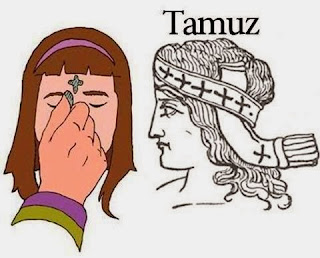
El Nuevo Testamento no manda ni menciona la celebración de la Cuaresma en ninguno de sus pasajes. Pero en cambio, el Antiguo Testamento sí la menciona. La Cuaresma, parece haber sido el preámbulo indispensable para el gran festival anual en conmemoración de la muerte y resurrección de Tamuz, el Mesías babilónico pagano. Los meses lunares babilonios de Junio y Julio fueron nombrados en honor del falso Mesías de Babilonia. Durante los cuarenta días que precedían a la fiesta de Tamuz (regularmente celebrada en Junio), los paganos celebraban su temporada de Cuaresma.

El profeta Ezequiel describe esto vívidamente. "Me dijo después [Él Señor], Vuélvete aún, verás abominaciones mayores...” Note que Dios llama a lo que Ezequiel está a punto de ver, abominaciones. ¿Qué ve el profeta? "...Y he aquí sentadas endechando a Tamuz” (Ezequiel 8:13-14). Ellas lloraban por Tamuz el falso mesías de los paganos. Esas endechas precedían a los festivales paganos en honor de la supuesta resurrección de Tamuz. El ayuno y las endechas se combinaban por un periodo de cuarenta días antes del festival en honor de Tamuz. El ayuno y las endechas y semi-ayuno caían durante la primavera. Por eso es que otro de los significados de esta fiesta es "primavera". La Cuaresma es una continuación de la costumbre pagana de abstenerse de ciertas comidas antes de la celebración de una resurrección supuesta de una deidad babilonia pagana. Dios llama a la Cuaresma una abominación. Por eso Cristo y la Iglesia Primitiva Apostólica jamás la observaron. Pablo prohibió a los cristianos observar estos "tiempos" paganos o temporadas (Gálatas 4:10).

Seguramente la gente hoy en día es sincera, pero también lo eran los paganos. Pero, ¿qué tiene de malo que el Domingo de Resurrección y la Cuaresma sean viejos festivales paganos? ¿No está bien que los observemos en honor de Cristo? Este es el modo humano de razonar. Pero permitamos que Dios conteste estos interrogantes. Dios habló a Moisés para advertirle al pueblo que no siguiera estas costumbres de los paganos. He aquí las palabras de Dios. "Guárdate...no preguntes acerca de sus dioses, diciendo: De la manera que servían aquellas naciones a sus dioses, yo también les serviré. No harás así al eterno tu Dios; porque toda cosa abominable que el Eterno aborrece, hicieron ellos a sus dioses..." (Deut. 12:30-31).

He aquí lo que Dios dice, no importa qué pensemos nosotros, lo que importa es la opinión de Dios. Él llama abominaciones a estas costumbres de la Cuaresma y Domingo de Resurrección porque ellos conmemoran ideas falsas. La penitencia de la cuaresma  es una forma de tristeza mundana sobre las cosas que hiere la conciencia de uno. Pero, la conciencia no es la guía suficiente para bien o mal. La penitencia de la cuaresma es una falsificación del arrepentimiento genuino del pecado. No es, pues de asombrar que los apóstoles jamás hubieran enseñado a la Iglesia la observancia de estas costumbres paganas. No es de extrañar que Jeremías se inspiró para escribir: "No aprendáis las costumbres de los paganos...porque las prácticas de los pueblos son vanidad" (Jeremías 10:2-3).

Note que la Cuaresma precede inmediatamente a la celebración del Domingo de Resurrección, supuestamente la de Cristo. Pero Cristo no resucitó en un domingo. El Nuevo Testamento, en ninguno de sus pasajes, nos manda observar la resurrección de Cristo. Lo que se nos manda observar es la conmemoración de su muerte. La Iglesia Primitiva Apostólica observó ese conmemorativo, pero jamás celebró el Domingo de Resurrección ni la Cuaresma. Dios nunca mandó la celebración de ese Domingo en honor de la resurrección. Todo ello es en honor del falso mesías, Tamuz.

El Domingo de Resurrección y la Cuaresma celebran la resurrección del Cristo falso. Pablo advirtió sobre la propagación de esta costumbre: "Porque si viene alguno predicando a otro Jesús que el que os hemos predicado..." (II Cor. 11:4). Y eso es exactamente lo que ha sucedido. La Cuaresma celebra a otro Jesús, al mesías falso de Babilonia. La celebración de un festival en domingo, para honrar la resurrección, viene directamente del paganismo. Los paganos celebraban la resurrección de Tamuz, inmediatamente después de la Cuaresma. Este festival se propagó entre el mundo que profesaba ser cristiano después de la muerte de los apóstoles.

Note que inmediatamente después de la observancia de la Cuaresma, el profeta Ezequiel ve que la gente celebra un culto matutino de resurrección. "Y me dijo: ¿No ves...? [El ayuno de la Cuaresma]. Vuélvete aún, verás abominaciones mayores que estas. [¿Qué ve el profeta? ¡Hombres postrándose hacia el oriente, y adorando al sol! Servicios matutinos de Domingo de Resurrección, la culminación de los cuarenta días de la Cuaresma] (Ezequiel 8:15-16).


WHAT IS LENT?

According to history 4,000 years before the birth of Christ Lent was already being observed! It was still being observed during the time of Jesus and in the days of the Apostles. Yet, Christ did not institute it and He never observed it! The Apostles and the early apostolic church never observed it either. When, where, and who started the practice of Lent?

The Lenten season is a period of abstinence of 40 days, beginning with Ash Wednesday. The word Lent comes from an old English word “Lenten” which means springtime. The celebration of Lent originally was associated with the spring. But, nowadays it is celebrated in the winter! Why? Where did it originate and when was the celebration changed from spring to winter?

If we look back in history to the close of the second century, a hundred years after the death of the last Apostle, we find that in a letter written to the bishop of Rome about Lent the following; “For the controversy is not only concerning the day, (there was a controversy over the time to celebrate the day called Easter) but also concerning the very manner of the fast (the fast of the Lenten season.). For some think that they should fast one day, others two, yet others more and some forty days.” This letter was written by Ireneaus, a bishop from Lyon, France. “And this variety in its observance,” continued Irenaeus, “has not originated in our time, but long before in that of our ancestors. It is likely they did not hold to strict accuracy and thus formed a custom for their posterity according to private fancy,” not Apostolic authority or Christ’s command! [History of the Church by Eusebio, book 5, chapter 24]

Lent came into the church through custom, through private fancy. The church observed Lent, not because the Bible commanded it, but because professing Christians adopted the custom from their gentile neighbors. “As long as the perfection of the primitive church, the inspired Apostolic church, remained inviolable,” wrote Cassian, a Catholic historian of the 5th century, “there was no observance of Lent, but when men began to decline from the Apostolic fervour of devotion, then the priests, in general, agreed to recall them from secular cares by a canonical induction of fasting…” [Antiquities of the Christian Church, book 21, chapter 1]. Fasting or abstinence from certain foods was imposed after the days of the Apostles by the authority of the priests! Lent is not of Apostolic origin. It did not originate with Christ or His Apostles. It entered at the same time that Easter did! It was introduced to the Christendom of the Roman world in the second century together with Easter Sunday. But, when did Easter Sunday originate?

Here is what Socrates Scholasticus wrote in the Ecclesiastical History, not long after Emperor Constantine came to power in the fourth century of the Christian era, “Neither the Apostles, therefore, nor the Gospels, have anywhere imposed Easter, wherefore in as much as men love festivals, because they afford them cessation from labor: each individual in every place, according to his own pleasure, has by a prevalent custom celebrated (Easter). The Saviour and His Apostles have enjoined us by no law to keep this feast, just as many other customs have been established in individual localities according to usage, so also the feast of Easter came to be observed in each place, according to the individual peculiarities of the peoples inasmuch as none of the Apostles legislated on the matter. And that the observance originated not by legislation, but as a custom the facts themselves indicate” [chapter 22]. Easter originated as a custom of the people and so did Lent. Lent is merely the introduction to Easter. Easter is the climax of Lent.

From what city did the celebration of Lent begin to spread throughout the professing Christianity of the Roman world? The Catholic Encyclopedia records the following: “In any case it is certain from the festival letters of Saint Athanasius that in 331, he enjoined upon his flock a period of forty days of fasting preliminary to, Holy week and second that in 339, after having traveled to Rome and over the greater part of Europe, [he] wrote in the strongest terms to urge this observance [of Lent] upon the people under his jurisdiction.” Athanasius, Bishop of Alexandria in Egypt, was influenced by Roman customers. It was in Rome that not only Easter but also Lent entered the Christian world. Irenaeus confirmed this when he wrote in his famous letter that Lent and Easter were introduced during the time of Bishop Xystus of Rome. This Bishop did not permit those after him to observe the Apostolic practice of commemorating the death of Jesus. Instead, he introduced the custom of Easter and Lent. But, from where did the Bishops of Rome obtain the custom of Lent?

In the early church, Lent was always called “Tessarakoste,” in Greek, or “Quadragesima” in Latin. These two words mean; “count forty”. Lent, though sometimes celebrated for only one or two days or for several weeks, was always called the celebration of forty days! Why? Why should a period of abstinence have gone by this name even though it was not until the beginning of the eighth century after Christ that the final number of forty days was fastened on the whole church? The answer is obvious, abstinence among the pagans was by the name “count forty” because that is the length of time they celebrated their spring festival! Remember, the word Lent means “spring”. The historian Wilkinson, in his book Egyptian Antiquities, chapter 3 page 181, wrote that the pagans kept fasts, many of which lasted from seven to forty-two days and sometimes even a longer period.

The original length of the fast, traced back to ancient Babylon 4,000 years ago, was a forty-day fast in the spring of the year [from the book Nineveh and Babylonia, by Layard, chapter 4, page 93]. That is why it bore its name of “forty days” or Lent! Each nation gradually changed the length of celebration, but they all retained the name. The professing Christians of the second century merely adopted the customs found in their respective countries, which is why they were divided as to its length from the beginning. It took the churches of the western world nearly eight centuries to re-impose a total period of forty days abstinence as had been the original custom at Babylon. Christianity today has turned to pagan customs instead of the commands of God found in the Bible.

Lent is nowhere commanded or mentioned in the New Testament but, it is mentioned in the Old Testament! Lent was an indispensable preliminary to the great annual festival in commemoration of the death and resurrection of Tammuz, the pagan Babylonian counterfeit of the Messiah. The Babylonian lunar months of June and July were named in honor of this false Babylonian messiah. Forty days preceding the feast of Tammuz usually celebrated in June, the pagans held their Lenten season.

Ezekiel describes it vividly in chapter eight of his book the thirteenth and fourteenth verses: “He said also unto me, turn thee yet again and thou shalt see greater abominations.” You will notice that God calls what Ezekiel is about to see an abomination. What does the prophet see? “And, behold, there sat women weeping for Tammuz.” They wept for Tammuz, the false messiah of the pagans. That weeping preceded the pagan festival in honor of a supposed resurrection of Tammuz. Fasting was joined with weeping for a period of forty days before the festival in honor of Tammuz. The period of fasting, weeping and semi fasting takes place during the springtime. That is why the word Lent means “spring”.

Lent is a continuation of the pagan springtime custom of abstaining from certain foods just prior to celebrating a supposed resurrection of a pagan Babylonian deity. God calls the celebration of Lent an abomination. That is why Christ and the Apostolic Church never observed it! The Apostle Paul forbade the believers to observe these pagan “times or seasons” (Galatians 4:10).

Surely the people nowadays are sincere, but so were the pagans. But, what if Easter and Lent are ancient pagan festivals? Isn’t it still all right, if we use them to honor Christ? That’s the way people reason. Let God answer that question. God spoke to Moses to warn the people that they should not follow the customs of the pagans. Here are the words of God: “Take heed…that thou enquire not after their gods, saying; how did these nations serve their gods? Even so, will I do likewise? Thou shalt not do so unto the Lord thy God! For every abomination to the Lord, which he hateth, have they done unto their gods: (Deut. 12:30-31).

Here is what God says. It doesn’t matter what we think, but it does matter what He thinks. He calls these pagan Easter and Lenten customs abominations because they commemorate false ideas. The penitence of Lent is a form of worldly sorrow over the things that smite one’s conscience. But, conscience is not sufficient to guide to right or wrong. The penitence of Lent is a counterfeit of genuine repentance of sin. Easter commemorates a supposed Sunday morning resurrection of Jesus, though in fact Jesus was resurrected, according to the Bible, on Saturday evening, after He had been in the tomb three days and three nights. It is therefore not surprising that the apostles could never have taught the Church the observance of these heathen customs. Is it any wonder that Jeremiah was inspired to write: “Learn not the way of the heathen…for the customs of the people are in vain” (Jeremiah 10:2-3).

Notice that Lent precedes immediately the celebration of Resurrection Sunday (Easter), supposedly that of Christ. But, Christ did not resurrect on a Sunday. The New Testament, in none of its passages, orders us to observe Christ's resurrection. What we are commanded to observe is the commemoration of his death. The Primitive Apostolic Church observed that one commemorative, but it never celebrated either Easter Sunday or Lent. God never ordered the celebration of this Sunday in honor of the resurrection. All this is in honor of the false messiah, Tammuz.

Easter Sunday and Lent celebrate the resurrection of the false Christ. Paul warned about the spread of this custom: "For if he that cometh preacheth another Jesus, whom we have not preached ...” (II Corinthians 11:4). And this is exactly what has happened. Lent celebrates another Jesus, the false Messiah of Babylonia. The celebration of a festival on Sunday, to honor the resurrection, comes directly from paganism. The pagans were celebrating the resurrection of Tammuz, immediately after Lent. This festival was propagated throughout the professing Christian world after the death of the apostles.

Notice that immediately after the observance of Lent, the prophet Ezekiel sees that the people celebrate a sunrise service of resurrection: “Then said he unto me, Hast thou seen this…? [The fasting of Lent] Turn thee yet again, and thou shalt see greater abominations than these”. [What does the prophet see?] Men prostrating themselves to the East, and worshipping the Sun! Sunrise services on Easter Sunday, the culmination of the forty days of Lent (Ezekiel 8:15-16).